A Travel Wardrobe Built Around One Jacket
A travel wardrobe built around one jacket turns a short-trip packing list into workable outfits, with layers and shoes chosen for the actual itinerary.
What should you pack when one jacket needs to work from the train platform to dinner? A travel wardrobe built around one jacket depends less on matching every garment to it than on making sure each item has a clear job. The jacket is the frame; the itinerary decides what belongs inside it.
Say Mara is planning an invented, hypothetical three-night visit to a coastal city. Her plans include a train ride, a long walk, a museum visit, and dinner at a relaxed restaurant. The forecast is cool and changeable, with possible rain. She has a navy hip-length jacket with a simple shape, a collar she can wear open or raised, and room for a sweater.
Start With the Itinerary
Mara writes down what she will actually do, then notes the clothing demands each activity creates. Sitting on a train calls for comfortable clothes. A long walk calls for shoes with grip and layers she can adjust. The museum and casual dinner need no separate outerwear, but a clean top can make the dinner outfit feel considered.
She also checks where she will be outside and at what parts of the day. A cool morning followed by a mild afternoon favors layers that can be removed. Rain changes the shoe and bag choices as well as the outerwear plan. One daily high temperature cannot describe the whole trip.
If an event is uncertain, she avoids packing for a vague possibility. “Dinner at a relaxed neighborhood restaurant” gives her a useful clothing decision; “perhaps something dressy” does not. The latter is how a second jacket sneaks into a bag without an invitation.
Check the Jacket’s Limits
Mara’s jacket is comfortable over a shirt and a fine sweater, but it is not a heavy winter coat. Its fabric can handle a brief sprinkle, not a sustained downpour. She treats those limits as packing facts, not flaws to be corrected by optimism.
She puts on the thickest layer she plans to bring and wears the jacket over it. She reaches forward, closes the front, and raises the collar. If the shoulders bind or the front pulls, the combination is out; she can choose a thinner layer or a roomier jacket.
A shell, blazer, or insulated coat could be the better starting point for another trip. A shell may suit wet walking but feel too casual for a particular dinner. A blazer can look settled indoors yet offer little comfort on a windy waterfront. The right choice follows the actual weather and plans.
Choose Useful Layers
Mara packs a long-sleeved cotton shirt, a fine-gauge sweater, and a simple base-layer top. The shirt works on its own indoors and beneath the sweater. The sweater adds warmth without crowding the jacket. The base layer can go under the shirt on a colder walk.
She leaves behind a thick, high-necked knit that bunches under the collar and a shirt that only looks right beneath a separate blazer. Each packed top should make sense when the jacket comes off. Outerwear is not a repair service for an awkward outfit.
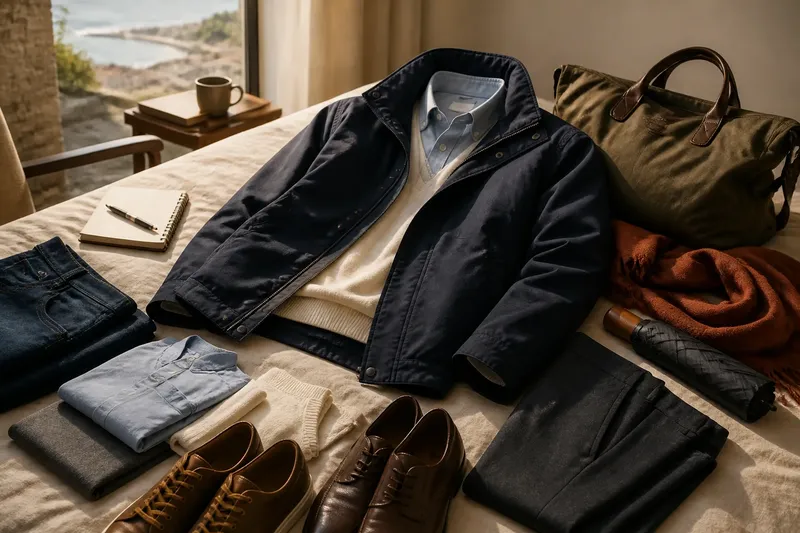
Color is a practical filter, not a matching exam. Mara’s navy jacket works with charcoal trousers, dark jeans, a pale blue shirt, and a cream sweater. A rust scarf adds an accent without requiring every other item to join the committee.
Build Outfits by Use
For the train, Mara wears the shirt with dark jeans and comfortable walking shoes. The sweater stays within reach. If the carriage is warm, she can remove the jacket; if the platform is chilly, she can add the sweater underneath.
For the walk, she wears the base layer under the shirt and sweater, then adjusts the jacket as needed. She carries a compact umbrella rather than expecting the jacket to handle every kind of rain. If the route includes wet stone or muddy paths, her shoes must suit the surface, not merely the dinner outfit.
For the museum, she wears the pale blue shirt with charcoal trousers and the jacket. For dinner, she changes into a clean top and keeps the same trousers and jacket. These combinations vary by activity without demanding an entirely separate outfit for each one.
Imagine the forecast changes before departure to colder, wetter conditions. Mara checks whether her jacket still covers the expected weather, then considers a warmer layer, appropriate rain protection, and shoes for wet streets. If the jacket remains inadequate or uncomfortable, she chooses different outerwear. “One jacket” is a packing approach, not a weather command.
Make the Packing Decisions
Mara’s proposed clothes are the jacket, three tops, a sweater, dark jeans, charcoal trousers, walking shoes, and a cleaner pair of shoes for dinner. She uses this list to make decisions, rather than adding garments because they look appealing on their own.
- Weather coverage: Check the forecast against the jacket’s warmth, coverage, and rain protection. If it falls short, choose suitable outerwear; if it covers the expected conditions, keep it as the sole jacket.
- Layer fit: Try the thickest planned layer under the jacket and reach forward. If the shoulders bind or the front pulls, replace the layer with a thinner one; if movement stays easy, keep the combination.
- Wearability indoors: Remove the jacket and check each top in a mirror. If a piece only works under outerwear, leave it out unless a planned activity gives it a clear purpose; otherwise, pack it.
- Activity needs: Compare shoes and clothes with the actual walking, sitting, and dining plans. If a route needs specialized footwear or an event needs a distinct outfit, pack that item; if not, choose a piece that covers more than one setting.
- Color combinations: Lay the jacket beside each proposed top and bottom. If a combination looks wrong to you, remove or replace one piece; if you would wear it, keep the pairing available.
- Rain plan: Check the expected route and the jacket’s care label or manufacturer information. If rain protection is uncertain or inadequate, bring an umbrella or suitable rainwear; if the route is sheltered and conditions call for neither, leave the extra protection behind.
- Second use: Check whether each top has a role in more than one planned setting. If it serves only an unlikely occasion, leave it out or replace it with a more useful option; if it works across the itinerary, pack it.
For Mara, the check rules out a lightweight blouse she had considered for dinner. It clashes with the jacket’s casual collar and has no other job on the trip. She leaves it home and keeps the pale blue shirt, which works for both the museum and dinner.
Questions About One Jacket?
What makes a jacket useful for travel?
It should suit the planned settings, fit over the layers you intend to wear, and work with the clothes you are bringing. No single jacket suits every climate or occasion.
Should I pack another outer layer?
Pack one if the forecast or itinerary requires a function the first jacket cannot provide. Persistent rain, severe cold, or a formal event may make a second layer more sensible than asking one jacket to do incompatible jobs.
How do I choose the layers?
Match them to expected temperature changes and activities, then check that they fit together and work separately. A base layer, shirt, and sweater can be useful, but the right mix depends on the garments and conditions.
What if the forecast changes?
Recheck it before leaving and revise the outerwear or rain plan if conditions shift. If the jacket no longer suits the forecast, choose a more appropriate one rather than relying on layers that cannot address its limits.
Close the Packing Loop
Mara’s finished wardrobe gives each garment a reason to be there: the jacket covers the expected conditions, the layers adjust warmth, and the shoes suit the route. A travel wardrobe built around one jacket is most useful when the jacket is chosen for the trip rather than treated as a universal answer.
Before closing the bag, put on the combinations you plan to wear and move in them. If one needs a missing garment or feels uncomfortable once the jacket is on, change the combination while the closet is still nearby. That small check is easier than discovering the problem beside a station platform.