Choosing a Shirt Cuff That Fits Your Day
Compare shirt cuff styles by closure, comfort, and occasion so you can choose a cuff that suits your wardrobe and feels right through an ordinary day.
Which shirt cuff will feel comfortable at your desk and still suit the occasions you dress for? A shirt cuff affects how a sleeve closes, how it sits beside a watch, and whether you need cuff links before leaving home. The practical choice is usually clearer once you compare the closure and fit, not just the name.
Barrel Cuffs
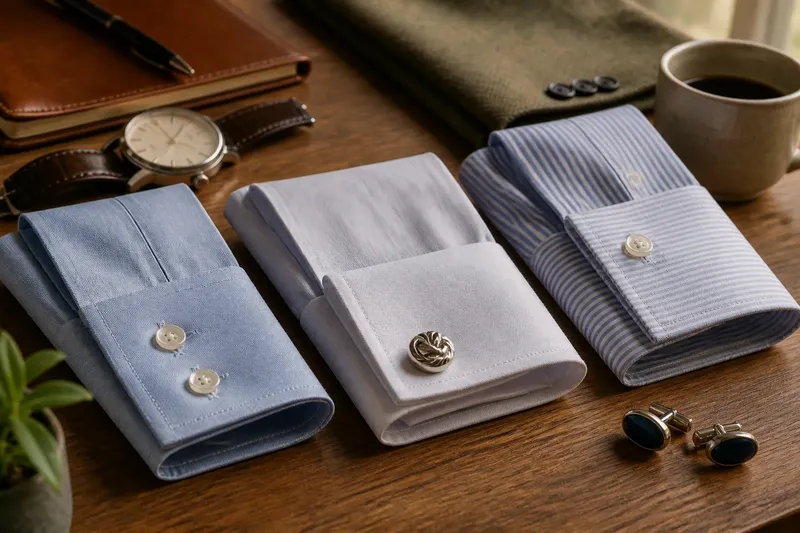
A barrel cuff closes with one or more sewn-on buttons. Its ends overlap around the wrist, making it the straightforward option for everyday shirts: there is no separate accessory to remember.
A single-button cuff tends to have a simple profile. A two-button cuff may offer another fastening position, though the useful fit depends on where those buttons sit. Try the cuff closed, then bend your wrist and reach forward. It should not pinch or slide so freely that it catches on your hand.
Barrel cuffs suit casual shirts, office wear, and many outfits with a jacket. If you wear a watch, check whether the cuff can sit beside or over it without bunching. A closure that is comfortable without a watch may feel different once the watch is in place.
French Cuffs
A French cuff, also called a double cuff, folds back on itself and closes with cuff links. The folded fabric gives the wrist a more deliberate appearance, while the links replace the usual sewn-on button closure.
This style is often chosen for dress shirts and tailored outfits, but it is not reserved for one kind of event. The practical question is whether you want to handle cuff links and whether the folded layers sit neatly beneath your jacket. A link should pass through the holes without forcing or pulling the fabric.
Link fastenings vary. A toggle or chain can be easy to handle; a fixed post may take more careful alignment. Choose a pair that stays secure through ordinary movement and feels comfortable against the wrist. The cuff is a little like a notebook’s binding: it holds the edge together, but the finish changes the impression of the whole object.
Convertible Cuffs
A convertible cuff can close with a button or with cuff links. The exact arrangement varies, so inspect the shirt rather than assuming that extra buttonholes mean it supports both options.
With its button fastened, the cuff works much like a barrel cuff. With links, it offers a more dressed-up finish. That flexibility is useful if one shirt serves different settings, but the extra openings and overlapping fabric can look busier than a plain button cuff.
Say you already own cuff links and need one shirt for desk work and an occasional formal dinner. You try a convertible cuff on with your usual watch, fasten its button, and move your wrist: it closes comfortably and does not catch. You then insert your links and fold the cuff back; the layers lie flat and the links sit securely. The result is a reasonable two-setting choice. If the button pinches or the folded cuff bunches, that versatility is not worth the discomfort, and a better-fitting barrel or French cuff is the simpler option.
Matching Cuffs to Use
For a shirt worn often, a barrel cuff is usually the least demanding choice. It closes quickly and needs no extra accessory. A French cuff makes sense when you like wearing links and the outfit can carry a more formal detail. A convertible cuff sits between them if you will use both fastening methods.
Consider what will cover the sleeve. A cuff hidden beneath a sweater has little chance to make a statement; one visible beneath a jacket needs to sit cleanly and stay in place as you move. For a buttonless or unusual cuff, judge the specific closure and fit rather than treating it as a standard design.
Buying Checks
Try the cuff with the shirt worn as you expect to wear it. Each check should lead to a clear choice:
- Closure: Check for buttons, link holes, or both. If the fastening matches what you will use, keep it in consideration; if not, choose a cuff with a closure you can manage.
- Wrist fit: Fasten the cuff and bend your wrist. If it pinches, try another size or button position; if it slips over your hand, look for a closer fit.
- Hand passage: Open the cuff and pass your hand through. If it clears without strain, the opening works for you; if not, choose a roomier cuff.
- Watch room: Wear your usual watch and close the cuff. If the fabric lies smoothly, the combination works; if it bunches or catches, try a different cuff shape or watch position.
- Fold and holes: On a French cuff, fold the layers and align the holes. If they meet without tugging, the construction sits well; if they resist or twist, choose another shirt or cuff style.
- Button position: On a barrel cuff, try each available button. If one position feels comfortable, the cuff offers a usable fit; if none does, look for a different wrist fit.
- Care label: Check the shirt’s care directions and any instructions for its fasteners. If the routine suits how you launder and press shirts, proceed; if not, choose a shirt with care requirements you can follow.
Cuff Care
Cuffs brush against desks, bags, and door handles, so marks may appear there before they show elsewhere. Follow the care label when treating stains, and avoid hard rubbing that can roughen fabric or distort the edge. Remove cuff links before laundering and follow any specific instructions for buttons or other fasteners.
For pressing, open a barrel cuff so it lies flat. Press a French cuff flat before folding it back, and use a pressing cloth if the fabric or care directions call for one. A crisp edge is useful; a shiny one is usually not the intended result.
Questions About Cuffs?
Can you wear French cuffs without a jacket?
Yes, if the shirt and the rest of the outfit suit each other. Without a jacket, the folded cuff is more visible, so check that its layers sit neatly.
Are cuff links only for formal events?
No. They can work with less formal clothing if the shirt and links feel consistent with the outfit. A double cuff still looks more deliberate than a standard button cuff.
How much cuff should show under a jacket?
There is no single amount that suits every jacket and wearer. Look for a small, consistent glimpse when your arms rest naturally, and check that the jacket sleeve does not pull the cuff out of place.
Can a tailor alter a cuff?
Possibly, depending on the shirt’s construction, seam allowance, and buttonholes. Ask a tailor to inspect the garment before deciding whether an alteration is practical.
Choosing Your Cuff
A barrel cuff favors convenience, a French cuff accommodates links, and a convertible cuff offers both closures with a more involved design. The best shirt cuff is the one that closes comfortably, works with your watch and clothes, and fits the routine you will actually keep.
Before buying, fasten the cuff and move your hand as you would during a normal day. That small check tells you more about the sleeve than its name does, and may save you from discovering the fit problem halfway through a meeting.